

Best Cabinets for Pacific Northwest Climate
The Pacific Northwest (PNW)—including Washington, Oregon, and parts of British Columbia—is known for heavy rainfall, high humidity, and cooler temperatures. While this climate creates lush forests and beautiful landscapes, it can be harsh on building materials, especially kitchen and bathroom cabinets. Moisture, condensation, and temperature fluctuations can cause wood movement, mold growth, delamination, and finish failure if cabinets are not designed for damp environments.
This guide explains the best cabinets for Pacific Northwest climate, including the most durable materials, construction methods, finishes, and installation practices. Whether you are building a new home or renovating a kitchen, this article will help you choose cabinets that last decades in rainy and humid conditions.
Why Pacific Northwest Climate Is Challenging for Cabinets
The Pacific Northwest has unique environmental conditions that directly affect cabinetry performance:
- High annual rainfall: Many PNW cities receive 35–150 inches of rain per year.
- Consistently high humidity: Relative humidity often stays between 60% and 80%.
- Cool temperatures: Seasonal temperature swings cause expansion and contraction in materials.
- Coastal salt air: Homes near the coast face corrosion and accelerated wear on metal hardware.
These factors can lead to warping, swelling, rot, mold, and joint failure if cabinets are not built with moisture-resistant materials and finishes.
Best Cabinet Materials for Humid and Rainy Climates
1. Marine-Grade Plywood (Best Overall for PNW)
Marine-grade plywood is one of the most reliable materials for cabinets in humid and coastal climates. It uses waterproof adhesives and high-quality veneers with minimal voids, preventing delamination and moisture penetration.
Why it’s ideal:
- Excellent moisture resistance
- Strong structural stability
- Minimal warping and swelling
- Long lifespan in damp environments
Marine-grade plywood is commonly used in boats and coastal homes, making it a premium choice for cabinet carcasses in the Pacific Northwest.
2. Baltic Birch Plywood (Premium Durable Option)
Baltic birch plywood features many thin layers (plies) bonded together, creating a dense and stable panel. It is often used for high-end cabinetry and drawer boxes.
Benefits:
- High strength-to-weight ratio
- Smooth surface for finishes
- Better humidity resistance than standard plywood
- Excellent for drawer boxes and cabinet interiors
When sealed properly, Baltic birch performs well in humid kitchens and bathrooms.
3. Solid Hardwood Cabinets (Maple, Cherry, Oak)
Solid hardwood cabinets can perform well in the Pacific Northwest if properly kiln-dried and sealed. Hardwood expands and contracts with humidity, so construction and finishing quality matter.
Best hardwoods for humid climates:
- Maple: Dense, stable, and resistant to movement
- Cherry: Durable with moderate movement
- Oak: Strong and naturally moisture tolerant
Hardwood is best used for doors and face frames, while plywood is recommended for cabinet boxes.
4. Moisture-Resistant MDF (Painted Cabinet Doors)
Medium-density fiberboard (MDF) is popular for painted cabinet doors due to its smooth surface. Standard MDF is vulnerable to moisture, but moisture-resistant MDF performs better in damp climates.
Pros:
- Ideal for painted finishes
- Cost-effective
- Smooth and uniform surface
Cons:
- Swells if exposed to standing water
- Not recommended for cabinet carcasses in humid environments
Use MDF only for doors and panels with a protective finish.
5. Thermofoil and Laminate Cabinets (Low Maintenance)
Thermofoil and laminate cabinets have a plastic or vinyl surface bonded to engineered wood, creating a moisture-resistant barrier.
Advantages:
- Water-resistant surface
- Easy to clean
- Resistant to stains and humidity
- Budget-friendly option
These cabinets are practical for kitchens, bathrooms, and rental properties in rainy climates.
6. PVC and Stainless Steel Cabinets (Extreme Moisture Resistance)
For basements, laundry rooms, and coastal homes, PVC and stainless steel cabinets offer maximum durability.
- PVC cabinets: Mold-proof and waterproof, ideal for wet areas
- Stainless steel cabinets: Resistant to corrosion, commonly used in modern and commercial kitchens
These materials provide unmatched moisture resistance but may not fit traditional design preferences.
Cabinet Construction Features That Matter in Humid Climates
Cabinet Carcass (Box) Material
The cabinet carcass should be built from plywood, not particleboard. Particleboard absorbs moisture quickly and deteriorates in humid environments.
Joinery and Fasteners
High-quality joinery improves durability:
- Dovetail joints for drawers
- Dowels and screws for cabinet frames
- Glue and mechanical fasteners combined for strength
Door Construction
Five-piece solid wood doors with floating panels allow natural wood movement and reduce cracking. Plywood center panels are also stable in humid climates.
Drawer Boxes
Baltic birch plywood drawer boxes with dovetail joints are recommended for long-term performance.
Best Finishes for Cabinets in the Pacific Northwest
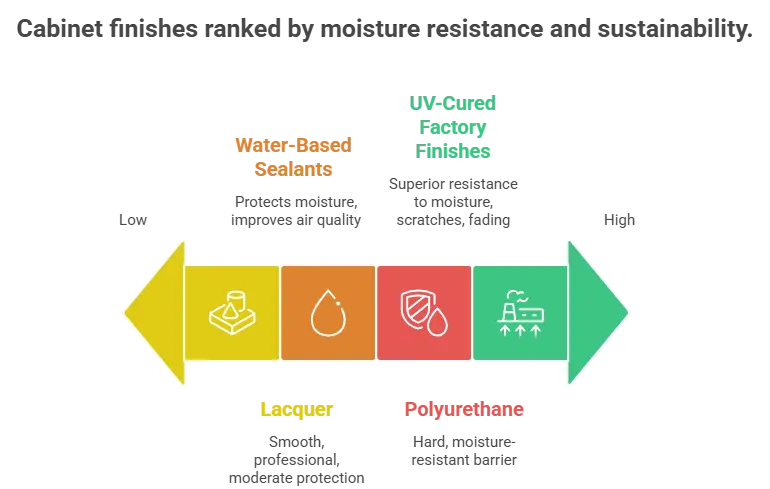
Polyurethane Finish
Polyurethane creates a hard, moisture-resistant barrier and is ideal for kitchens and bathrooms.
UV-Cured Factory Finishes
UV-cured coatings are applied in factories and offer superior resistance to moisture, scratches, and fading.
Lacquer Finish
Lacquer provides a smooth, professional appearance and moderate moisture protection when applied correctly.
Water-Based Sealants and Low-VOC Finishes
Water-based sealants protect against moisture while improving indoor air quality, aligning with PNW sustainability standards.
Preventing Mold and Mildew in Cabinets
Mold and mildew are common concerns in humid climates. Preventative strategies include:
- Sealing all cabinet interiors and edges
- Maintaining indoor humidity between 30% and 50%
- Installing proper ventilation and range hoods
- Using moisture-resistant materials and finishes
- Avoiding trapped moisture behind cabinets
Regular inspection and cleaning help maintain cabinet health in damp environments.
Hardware and Accessories for Coastal and Humid Homes
Metal hardware must resist corrosion in humid and coastal air. Look for:
- Stainless steel hinges and drawer slides
- Soft-close hinges with corrosion-resistant coatings
- Rust-resistant screws and fasteners
Quality hardware ensures smooth operation and prevents rust-related failures.
Cost Breakdown: Cabinets for the Pacific Northwest Climate

Investing in moisture-resistant materials reduces long-term maintenance and replacement costs.
Custom vs Ready-to-Assemble (RTA) Cabinets in Humid Regions
Custom Cabinets
Custom cabinets allow full control over materials, finishes, and construction. They are ideal for coastal and high-humidity homes where durability is critical.
Ready-to-Assemble (RTA) Cabinets
RTA cabinets can be budget-friendly but often use particleboard or low-grade materials. If choosing RTA, ensure plywood construction and sealed finishes.
Installation Best Practices for PNW Homes
Proper installation is essential for cabinet longevity in humid climates:
- Install moisture barriers behind cabinets
- Seal all cut edges and joints
- Allow air circulation with spacers and shims
- Avoid direct contact with damp walls or concrete
- Ensure proper kitchen and bathroom ventilation
Professional installation reduces moisture-related damage and improves cabinet lifespan.
Sustainability and Eco-Friendly Cabinet Options
Sustainability is a priority in the Pacific Northwest. Consider cabinets made with:
- FSC-certified hardwoods
- Formaldehyde-free plywood and MDF
- Low-VOC finishes and adhesives
- Recycled or rapidly renewable materials
Eco-friendly cabinets improve indoor air quality and align with regional environmental standards.
Expert Tips for Cabinets in Rainy and Coastal Climates
- Use plywood for cabinet boxes and solid wood for doors
- Seal every surface, including cabinet interiors
- Choose corrosion-resistant hardware
- Maintain indoor humidity with dehumidifiers or ventilation systems
- Inspect cabinets annually for moisture damage
Homeowners in coastal Washington and Oregon often see cabinet carcass failure first due to moisture penetration, making material selection critical.
Frequently Asked Questions
Conclusion
Choosing the best cabinets for the Pacific Northwest climate requires careful attention to materials, construction, finishes, and installation. Marine-grade plywood, Baltic birch plywood, solid hardwoods, and laminate cabinets provide strong performance in humid and rainy conditions. Durable finishes, corrosion-resistant hardware, and proper ventilation further extend cabinet lifespan.
By selecting moisture-resistant materials and following proven installation and maintenance practices, homeowners in the Pacific Northwest can ensure their cabinets remain durable, functional, and visually appealing for decades.
“Ready to upgrade your cabinets for the Pacific Northwest climate? Visit our cabinet services to get started.”

